Every major sporting event attracts more than passionate fans. It also attracts cybercriminals, fraudsters, organized crime, protest activity, misinformation campaigns, and opportunistic bad actors.
Events like the FIFA World Cup, Olympics, and Super Bowl create one of the most complex security environments organizations will ever face. Millions of travelers converge across multiple cities, thousands of organizations become stakeholders, and the threat landscape evolves daily.
The challenge isn’t simply securing a stadium. It’s securing an entire ecosystem.
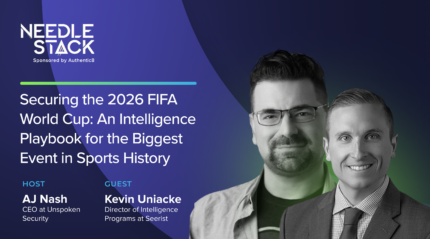
During a recent NeedleStack podcast, AJ Nash spoke with Kevin Uniacke, Director of Intelligence Programs at Seerist, about how intelligence teams prepare for these global events — and why success starts long before kickoff.
Below are some key takeaways from the episode. You can listen to the full conversation for deeper context and real-world nuance.
The Biggest Mistake: Treating the World Cup as One Security Problem
The 2026 FIFA World Cup spans:
- Three countries
- Sixteen host cities
- Hundreds of training locations
- Hotels
- Transportation hubs
- Fan zones
- Corporate hospitality venues
Each location has unique security considerations. Mexico City presents different risks than Guadalajara. Toronto differs from Vancouver. Miami operates differently than Kansas City.
Attempting to monitor the event as one giant security problem creates blind spots.
Instead, intelligence teams divide the challenge into manageable operational environments while maintaining strategic visibility across the entire event. This layered approach was a recurring theme throughout the podcast discussion.
Everything Starts with the Intelligence Cycle
Successful security operations begin with planning—not technology.
Before collecting data, analysts first identify:
- Who are the stakeholders?
- What decisions must they make?
- What intelligence do they need?
- What questions remain unanswered?
These Priority Intelligence Requirements (PIRs) drive collection efforts and prevent teams from drowning in unnecessary information.
Rather than monitoring everything, analysts focus on the information that directly supports operational decisions.
As Kevin Uniacke noted, organizations should spend the majority of their effort during the planning phase because well-defined requirements determine how efficiently resources are allocated.
Strategic Intelligence Must Connect to Tactical Reality
Global events don’t exist in isolation. Geopolitical developments can quickly influence travel, logistics, and security operations.
Examples include:
- Airline disruptions
- Fuel shortages
- Political unrest
- Border policy changes
- Organized crime activity
- Large-scale protests
Security teams need the ability to move seamlessly between strategic developments and localized operational impacts.
A conflict thousands of miles away may influence airline availability for travelers heading to Toronto, while localized criminal activity near a stadium may require immediate route adjustments for personnel on the ground.
Situational Awareness Requires Continuous Monitoring
Planning creates the baseline. Monitoring enables adaptation.
As conditions evolve, intelligence teams continuously evaluate:
- Protest activity
- Transportation disruptions
- Road closures
- Weather events
- Organized crime reporting
- Social media indicators
- Government advisories
- Infrastructure disruptions
Rather than relying on static reports, organizations benefit from dynamic monitoring that surfaces only information relevant to specific people, locations, or operations.
This is where geofenced alerts, asset monitoring, and contextual intelligence become essential.
Why Human Analysts Still Matter in the Age of AI
Artificial intelligence can dramatically accelerate intelligence workflows. It can summarize reports, identify trends, and reduce manual effort.
But it should never replace human judgment.
Throughout the conversation, both speakers emphasized that intelligence remains a human-centered discipline. Analysts must still evaluate:
- Source credibility
- Confidence levels
- Context
- Assumptions
- Operational impact
AI should function as a force multiplier — not an autonomous decision maker. Transparency into data sources and analyst validation remains essential for trustworthy intelligence.
What are the most important steps for securing major global events?
Effective event security follows five intelligence-driven principles:
- Define stakeholder intelligence requirements.
- Continuously monitor evolving threats.
- Connect strategic developments to local risks.
- Validate information using trusted sources.
- Adapt operational decisions as conditions change.
Organizations that follow this framework can improve situational awareness while reducing operational risk.
Intelligence Products Should Match the Audience
Not every stakeholder consumes intelligence the same way. Executives need concise decision support. Field personnel require immediate alerts, while security operations centers benefit from dashboards and geospatial visualizations.
Operational teams often rely on:
- Geofenced alerts
- Heat maps
- Executive summaries
- Threat dashboards
- Pre-travel intelligence briefs
- Post-event lessons learned
Providing the right information in the appropriate format improves decision speed during rapidly changing situations.
Travelers Also Play a Role in Security
While much of the discussion focused on enterprise security teams, the speakers also highlighted practical guidance for individuals attending major events.
Recommended best practices include:
- Research destinations before traveling.
- Verify ticket vendors.
- Monitor official travel advisories.
- Know emergency contacts.
- Identify alternate transportation routes.
- Plan communication with family or colleagues.
- Stay aware of changing local conditions.
Preparation reduces uncertainty and enables travelers to respond more effectively when conditions change.
Intelligence Is More Than Information
One of the strongest themes throughout the conversation was the distinction between information and intelligence.
Information answers what happened.
Intelligence explains:
- Why it matters
- Who is affected
- What decisions should follow
- How organizations should respond
Without context, even accurate information provides limited operational value.
How Authentic8’s Silo Workspace Supports Secure Investigations
For security and intelligence teams, visibility alone isn’t enough.
Analysts increasingly need to access, engage, capture, analyze, and report on digital threats without exposing their organization or compromising investigative integrity.
Authentic8’s Silo Workspace provides a unified investigation workspace that helps organizations:
- Mask organizational identity and geolocation during investigations.
- Protect analysts through complete browser isolation from external threats.
- Accelerate intelligence workflows with secure access to web-based sources.
- Manage investigative policies, access controls, and compliance requirements across teams.
Whether monitoring geopolitical developments, validating emerging threats, or investigating suspicious online activity surrounding major events, Silo enables analysts to securely enter the threat environment while maintaining operational security.
Final Thoughts
Major sporting events are no longer just logistical challenges — they are intelligence challenges.
Success depends on much more than physical security. Organizations need continuous situational awareness, validated intelligence, adaptable workflows, and trusted decision support to keep people, operations, and assets secure.
As global events continue to grow in scale and complexity, intelligence-driven security will remain one of the most effective ways to anticipate risks before they become incidents.
Explore more on the NeedleStack podcast
NeedleStack brings together intelligence, cybersecurity, and investigative leaders to unpack real-world threats shaping the digital environment. Each episode delivers practical insight you can apply across access, collection, analysis, and reporting.
Subscribe to NeedleStack to stay ahead of emerging threats and hear directly from experts working at the intersection of security, intelligence, and technology.
Frequently Asked Questions
What is event security intelligence?
Event security intelligence is the process of collecting, analyzing, and monitoring information to identify threats before, during, and after major events. It enables organizations to make informed security decisions based on evolving risks rather than reacting after incidents occur.
Why is open source intelligence important for major events?
Open source intelligence (OSINT) provides visibility into protests, travel disruptions, criminal activity, misinformation, and geopolitical developments that may affect operations. When combined with analyst expertise, OSINT helps organizations detect emerging risks earlier.
Can AI replace intelligence analysts?
No. AI accelerates research and data processing, but human analysts remain essential for evaluating source credibility, contextualizing information, assessing confidence, and making operational recommendations.
How can organizations prepare for large-scale events like the World Cup?
Organizations should define intelligence requirements early, identify key stakeholders, monitor evolving threats, validate information through trusted sources, and establish contingency plans before operations begin.